In-situ thermal remediation (ISTH), Spain

Effective thermal remediation of CHC sources using fixed heat sources with a hydraulic barrier.
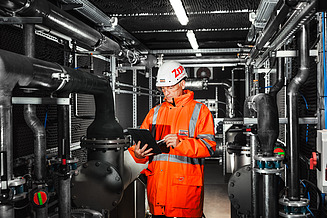
  • Digitalised plant control and monitoring of temperature trends. ©ZUT
    Digitalised plant control and monitoring of temperature trends. ©ZUT
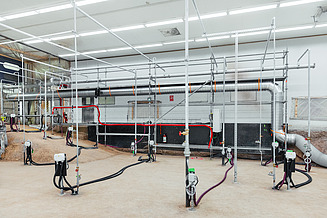
  • The affected areas are equipped with a dense network of temperature sensors, heat sources and a soil air extraction system. ©ZUT
    The affected areas are equipped with a dense network of temperature sensors, heat sources and a soil air extraction system. ©ZUT
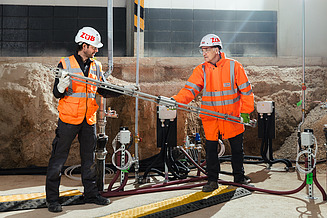
  • These fixed heat sources can heat the ground to temperatures of up to 450°C. ©ZUT
    These fixed heat sources can heat the ground to temperatures of up to 450°C. ©ZUT
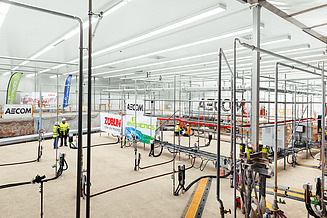
  • The entire affected area is equipped, even within existing buildings. ©ZUT
    The entire affected area is equipped, even within existing buildings. ©ZUT
Place
Spain
Client
Industry
Key figures
- 60 fixed heat sources
- Installed electrical capacity 1,000 kW
- Over 500 temperature measurement points
- Remediation area of approx. 10,000 m³ in the unsaturated soil zone
Special features
- Online monitoring of operational data (including vertical and horizontal temperature trends in the remediation zone, extraction volumes, negative pressures, and air temperatures)
- Online monitoring of pollutant concentrations in the raw and purified air using gas chromatographs (GC-PID)
Performance period
2025–2026

Thermal remediation of chlorinated hydrocarbons

Environmental contamination of the soil and groundwater, particularly due to chlorinated hydrocarbons, has been detected at the site of an industrial plant in northern Spain. The aim of the project is the comprehensive and permanent elimination of the source of a contamination by means of in-situ thermal remediation (ISTH) using fixed heat sources, which were continuously operated electrically at temperatures of up to 450°C. The hot vapours are extracted via a soil-air extraction system. In parallel with the ISTH remediation, hydraulic measures are being taken to secure the runoff and restrict the inflow. The hot groundwater, extracted using two-phase extraction pumps, is used to cool the hot raw air gases after being treated prior to discharge.

Scope of services

  • Complex installation of a pipework for steam, water, electricity and temperature sensors
  • Operation and maintenance
  • Soil air extraction system with a capacity of 2,000 Nm³/h
  • Soil air treatment: adiabatic cooling, condensate separation, activated carbon air filters
  • Accompanying groundwater drawdown upstream and downstream using two-phase extraction and groundwater pumps
  • Runoff prevention

Online-Measurements and data processing

The vast network of operational data – such as extraction volumes, negative pressures and temperature profiles measured in the field from over 500 temperature measurement points – requires intelligent data processing; after all, around 9,000 measured values must be processed and visualised every hour. In combination with online monitoring of pollutant concentrations in the input and exhaust using gas chromatographs (GC-PID), the heating progress could be adjusted according to the remediation process.

Contact

Thomas Meyer
Senior Engineer, International Manager
Wolfgang Schirm
Project Engineer, International Projects